After 23 Golds, Michael Phelps’ No Limits Philosophy Still Delivers
The medals are history. The early mornings, the doorway habit, and the courage to ask for help still guide him.
Most people first meet Michael Phelps as a finished product: the tall, long-armed figure touching the wall first in Beijing, London, or Rio, goggles off, mouth open in that familiar half-smile of someone who already knew the result. The numbers are so large they can feel abstract—28 Olympic medals, 23 of them gold, more than any athlete in history across any sport. What gets lost is the kid from a Baltimore County neighborhood who could not sit still, hated putting his face in the water, and treated every practice like it was the only way to prove he belonged.
He started swimming around age seven, partly for water safety and partly because his older sisters, Hilary and Whitney, were already in it. Whitney was especially good—nationally ranked and once close to an Olympic path before injuries. Early on, Michael was afraid to put his face in the water. A local instructor let him swim on his back until the fear eased. Once it did, the sport gave his restless mind a single line on the bottom of the pool to follow. Around sixth grade he was diagnosed with ADHD. Swimming became the place the energy had somewhere to go. By age 10 or 11 he was training at the North Baltimore Aquatic Club under Bob Bowman, a coach who would stay with him for the rest of his competitive life. Bowman saw the physical gifts early—long torso, flexible ankles, an unusual wingspan—but he also saw a kid who needed structure, goals, and habits that would keep him from quitting when it got hard.
The High School Years That Were Never Normal
Phelps attended Towson High School and graduated in 2003. He was not the typical student-athlete. Early-morning practices meant he was in bed when friends were out. He has said he was not the kid hanging around on weekends; he was the one protecting sleep so he could train again the next day. While classmates made junior varsity teams in other sports, he was already aiming at international times. In 2000, still a sophomore with braces on his bottom teeth and no driver’s license, he made the U.S. Olympic team for Sydney at age 15—the youngest American male swimmer to do so in 68 years. He finished fifth in the 200-meter butterfly. The result disappointed him more than it impressed outsiders. He was within striking distance of a medal and left convinced he could close the gap.
Towson later inducted him into its Athletics Hall of Fame. He called the recognition meaningful because it came from home. Throughout his career he stayed a Baltimore guy—Ravens fan, connected to the North Baltimore Aquatic Club, proud of the local support that showed up in parades after the big Games. The high school years were the foundation: the daily decision to trade a normal teenage life for the chance to find out how good he could get. Bowman and the club turned that decision into a system. They set written goals. They removed the word “can’t.” They trained through holidays. Phelps later recalled stretches of five or six years with almost no days off—Christmas, birthdays, and everything in between still meant the pool.
Building the Machine
The progression was methodical. After Sydney he set his first world record in the 200 butterfly at 15. By Athens 2004 he was the face of the Games, winning six golds and two bronzes while chasing Mark Spitz’s single-Olympics mark of seven golds. He came up one short, but the performance announced a new standard. Between Athens and Beijing the volume stayed extreme: long sessions in the water, dryland work for power and core stiffness, recovery that included sleep, naps, and bodywork. Bowman had him “watch the videotape” every night and morning—a mental rehearsal of the perfect race down to the smallest details, plus the versions that went wrong. When Phelps’s goggles flooded in the Beijing 200 butterfly final and he swam most of the race essentially blind, counting strokes the way he had practiced, the situation felt familiar rather than chaotic. He touched first and set a world record.
“I was taught at a very young age just to visualize,” he has said. “How I wanted it to go, how I didn’t want it to go, and how it could go.” The physical advantages mattered. The willingness to treat mental preparation and daily presence as equal to the miles mattered more. “If you want to be the best you have to do things that other people aren’t willing to do.” In Beijing he went eight for eight, breaking Spitz’s record and becoming the most decorated Olympian of all time in a single meet. London and Rio added more, including the final races that closed the competitive chapter after Rio 2016. Across five Games he collected 28 medals. He has been clear that only the 23 golds truly counted in his mind. “I hate to lose more than I enjoy winning,” he has said. Silver and bronze were not near-misses; they were evidence someone else had been better prepared that day.
The Moments That Actually Mattered
The same intensity that produced the medals created voids when the meets ended. Depression and anxiety followed the highs. After London he has spoken about reaching a point where he did not want to be alive anymore. Treatment helped. One tool that stuck came from therapy: every time he walked through a doorway, he said a positive affirmation about himself or something he believed. Bathroom door, bedroom door, hotel door—hundreds of times a day. At first it felt absurd. Then the repetition started to land. “It’s incredible how fast you see the things you say inside of you.”
On Instagram, years after the final race, Phelps put the real accounting into plain language: “The moments the world remembers are the races. The moments I remember are the early mornings, the days I didn’t want to do anything, the losses and the people who helped me through them. Sport taught me that strength isn’t just physical—it’s also having the courage to ask for help and to keep showing up. No matter what.”
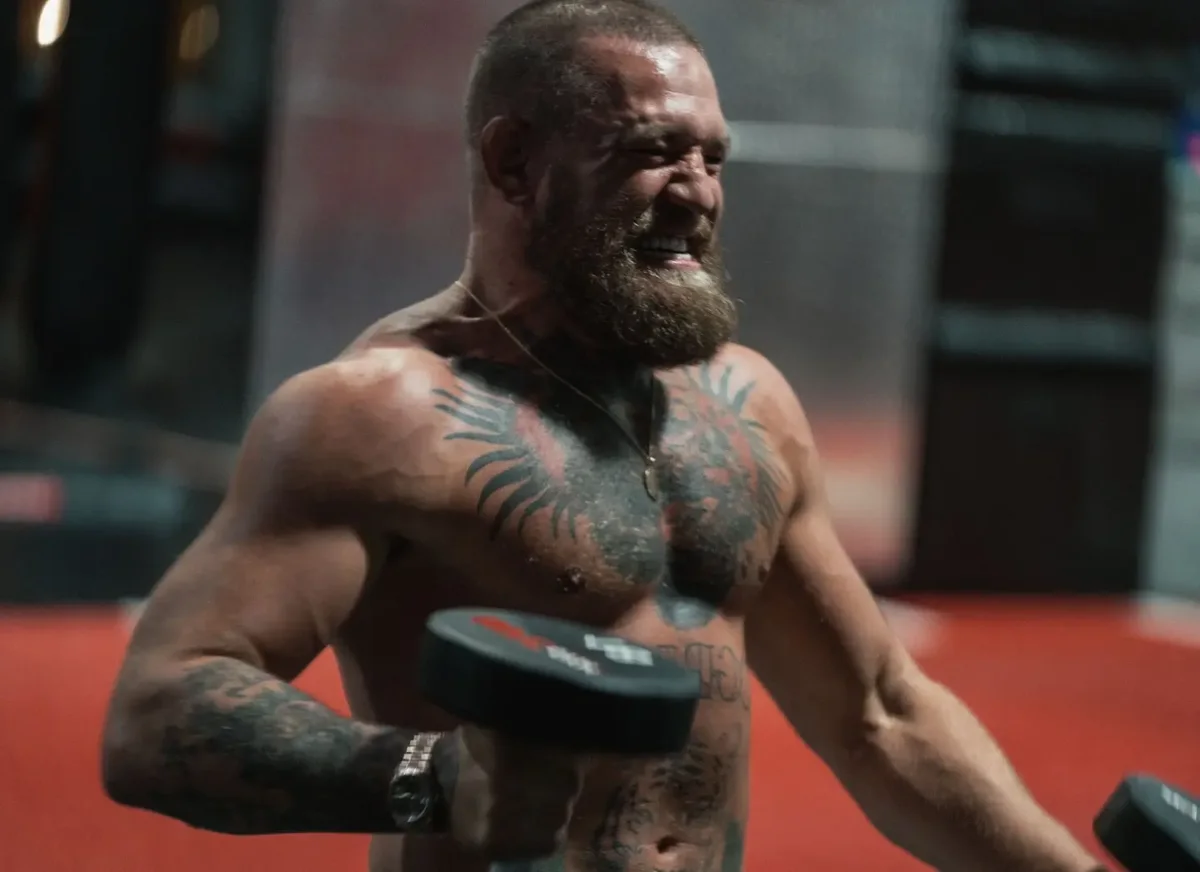
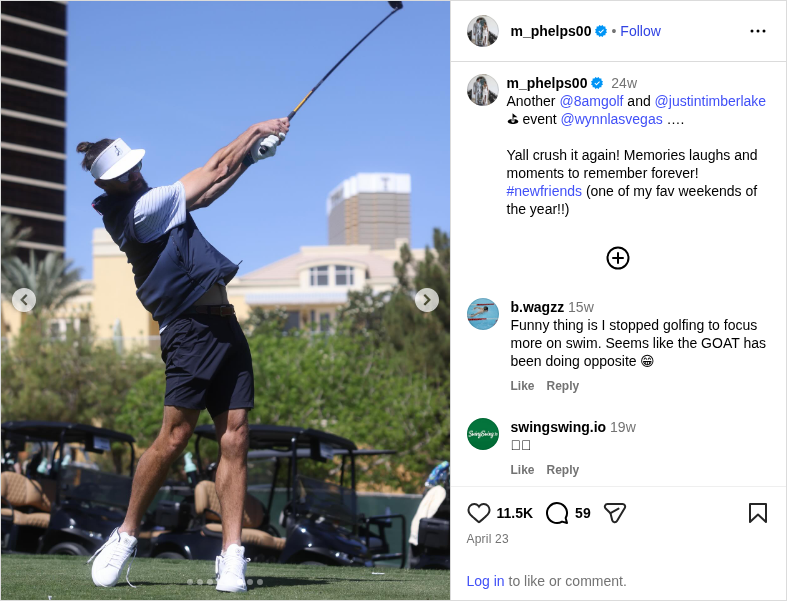
That is the version of the story that still guides him. He pairs the doorway practice with other anchors he still uses: cold plunges most mornings, roughly 90-minute gym sessions five or six days a week (music on when the mood is heavy), infrared sauna at night, therapy treated as non-negotiable, and golf that has become both outlet and competitive project. He works with the same trainer from his swimming days, focuses on mobility and power for the swing, and has talked about chasing scratch while sitting around a 7 handicap. On difficult days his wife, Nicole, still tells him to get in the water because it remains the one place his brain can turn off. Family—four sons—is central. The Michael Phelps Foundation, which began with water safety and access to swimming, expanded to include mental health and emotional resilience work for kids. “Winning a gold medal is way less important than having a chance to save a life,” he has said.
Training That Still Fits Real Life
Peak years involved massive volume in the pool plus dryland focused on pulling strength, core stiffness for streamline, and explosive legs for starts and turns. Current work is more sustainable: consistent strength and conditioning, golf-specific movement, recovery modalities, and the habit of listening to the body. Here is a practical, equipment-light session inspired by those priorities that former athletes can run 3–4 times per week. It takes about 45–55 minutes.
Warm-up (5–7 minutes)
Arm circles, leg swings, thoracic rotations, 20 bodyweight squats, 10 push-ups.
Main circuit — 3–4 rounds, rest 60–90 seconds between rounds


Pull-ups or band-assisted pull-ups: 6–10 reps (or inverted rows)
Push-ups: 10–15 reps
Goblet or bodyweight squats: 12–15 reps
Medicine ball or dumbbell rotational slams / woodchops: 8–10 per side
Hollow-body hold or dead bugs: 20–30 seconds or 8–10 per side
Plank (or side plank): 30–45 seconds
Power finisher (optional, 2–3 sets)
Squat jumps or box jumps: 5–6 explosive reps, full rest between sets.
Cool-down
5–8 minutes easy mobility for shoulders, hips, and thoracic spine.
The value is not chasing old volume. It is deliberate work on the muscles that support posture and power, plus the habit of finishing the work even when it is uncomfortable. Phelps’s standard still applies: if the goal matters, the daily decisions matter more than any single result.
Your Playbook
1. Treat the mind like a training partner. Write the goal. Visualize the version that goes well and the versions that go sideways often enough that it becomes ordinary.
2. Build one tiny daily ritual that reinforces the person you are trying to be. Doorway affirmations cost nothing and add up.
3. Move most days. Strength that protects your joints and a little power work will serve longer than chasing old numbers.
4. Protect recovery the same way you once protected practice. Sleep, cold or heat when it helps, and actual rest are part of the work.
5. When the competitive identity shifts, give the energy somewhere useful—family, mentoring, a foundation, a new sport, or simply showing up for people still in the middle of their hard years.
6. Ask for help early. Phelps has been clear that the hardest step was the one that kept him alive.
Five Quotes from Michael Phelps
These are verified words from Phelps himself, drawn from interviews, his book, and public statements across his career. They capture the mindset that turned a restless kid from Towson into the most decorated Olympian of all time—and the perspective he carries now.
1. “I hate to lose more than I enjoy winning.”
He has repeated versions of this for years, including on podcasts long after retirement. Silver and bronze did not register as success in his accounting. Only first place counted.
2. “I think that everything is possible as long as you put your mind to it and you put the work and time into it. I think your mind really controls everything.”
A core belief he has voiced repeatedly. It sits behind the visualization work with Bowman and the daily habits that made the improbable feel routine.
3. “If you want to be the best you have to do things that other people aren’t willing to do.”
The practical standard behind the years without days off, the extra sessions when others rested, and the refusal to treat holidays or birthdays as exceptions.
4. “Dream as big as you can dream, and anything is possible.”
Said after winning his seventh gold in Beijing, as he closed in on the historic eighth. It reflects the goal-setting practice he started as a kid with Bowman.
5. “There will be obstacles. There will be doubters. There will be mistakes. But with hard work… there are no limits.”
From his book No Limits: The Will to Succeed. It is the clearest summary of the approach that carried him through the pool and the harder work that came after the medals stopped.
The kid from Towson who could not sit still in class became the most decorated Olympian of all time by treating preparation, language, and daily presence as non-negotiable. The medals are history. The systems he built to get there, and the ones he uses now to stay sharp and useful, are still available. The early mornings, the days he did not want to do anything, the losses, and the people who helped him through them—those are the moments that still matter. Strength, he has learned, is also the courage to ask for help and to keep showing up. No matter what.
Ready to Train Like a Champion?
Unlock world-class training built for athletes who keep showing up for the next chapter.
Unlock the App