A New Flash. Dwyane Wade Is Building a New Standard for Fitness, Recovery, and Longevity
From the weakest moment of his life to the best shape of his career.
The room was quiet except for the steady beep of monitors. On December 18, 2023, Dwyane Wade lay on an operating table while surgeons removed 40 percent of his right kidney. He was 41, a three-time NBA champion, a Hall of Famer in waiting, and, for the first time in his adult life, unmistakably weak. His father had walked him into the hospital. His wife, Gabrielle Union, was waiting when he woke up. In the moments alone before and after, he later said, he struggled. “That moment was probably the weakest point I’ve ever felt in my life,” he told listeners on his podcast. “One thing you never want to do as a man is you never want your family to see you as weak.”
What followed was not a story of collapse. It was a recalibration. The same competitive engine that once carried the Miami Heat for years before LeBron James arrived, and that later adjusted to share the floor with him, turned toward a different kind of scoreboard: daily recovery, proactive health, mobility that lasts past the final buzzer, and the quiet work of staying capable for the people who count on him. This is the definitive account of how the man once called Flash has redirected that intensity into fitness, recovery, and overall wellness—and the practical ways anyone can borrow pieces of it.
The Years He Carried the Load Alone
Wade grew up in the Chicago area, in and around Robbins, Illinois. At Harold L. Richards High School he was not an immediate basketball star; football was the stronger sport early on. By his junior year the confidence and the game had caught up. He led Richards to conference titles, developed the attacking instincts that would define him, and eventually landed at Marquette. As a junior he averaged over 21 points and helped the Golden Eagles reach the Final Four in 2003. The Heat drafted him fifth overall that summer.
The early Miami years were his. As a rookie he averaged 16.2 points and helped turn a struggling roster into a playoff team. When Shaquille O’Neal arrived, Wade’s scoring and playmaking jumped. In 2005-06 he led the Heat to their first championship. In the Finals against Dallas he was relentless—averaging 34.7 points across the series and posting multiple 30- and 40-point nights after Miami fell behind 0-2. He was named Finals MVP at 24 years old. For the next several seasons he was the primary engine. In 2008-09 he won the scoring title at 30.2 points per game while also ranking among the league’s best in steals and blocks. He was All-NBA, an All-Star, and the clear face of the franchise. He nearly left for his hometown Bulls in free agency before the 2010 season; the call from LeBron changed the trajectory.
When LeBron Came to South Beach
The adjustment was real. Wade had already won a title and a Finals MVP. He was coming off elite individual seasons. “It was my team before he got there,” he has said of the transition. The first year was uneven; the Heat lost in the 2011 Finals to Dallas. After that, Wade expanded his game rather than simply shrinking it. He became an elite cutter and secondary creator. He defended at a high level, blocked shots from the guard position, and found ways to impact winning without needing to be the nightly leading scorer. With Chris Bosh completing the Big Three, Miami won titles in 2012 and 2013. Wade’s scoring dipped into the low-to-mid 20s in those peak Big Three years, but his efficiency, defensive impact, and willingness to share the ball helped produce two of the most dominant stretches of the decade. Across his career he finished at 22.0 points, 5.4 assists, and 4.7 rebounds per game. He made 13 All-Star teams, earned multiple All-NBA and All-Defensive selections, and was later named to the NBA’s 75th Anniversary Team before his 2023 Hall of Fame induction. He spent the large majority of his 16 seasons with Miami; brief stops in Chicago and Cleveland bookended a return home for the final years.
The Diagnosis That Changed the Priority List
After retirement in 2019, the regular medical infrastructure of an NBA team disappeared. Wade stopped getting consistent full physicals. In 2023, stomach discomfort and a weaker urine stream, combined with his father’s prostate cancer history and the knowledge that his grandfather had also dealt with the disease, pushed him to see a doctor. He asked for a full-body scan. Doctors found a mass on his right kidney that could not be biopsied without removal. Multiple opinions converged on surgery. On December 18, 2023, they took 40 percent of the kidney. Pathology confirmed it was cancerous—Stage 1.
Wade has described the emotional weight repeatedly. On Instagram he posted: “Stage 1 cancer… those words hit hard. December 2023 meant losing 40% of my kidney. It’s a scary thing to face. My dad’s own health journey taught me the importance of being proactive.” On the podcast he added that it was the first time his family saw him weak, and that in that vulnerability he found strength in the people who showed up. He chose his father to be with him in the most vulnerable pre-surgery moments; his wife was the first face he saw afterward. He has said he told himself before going under that if he came out the other side, he would do things differently. He has. He is cancer-free, more intentional about checkups, and openly encourages other men—especially those with family history—to put their primary-care doctors to work and ask better questions rather than accept a quick exit from the office.
What the Work Looks Like Now
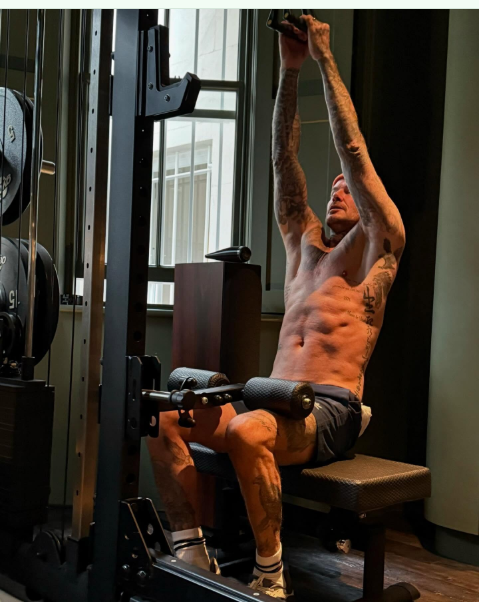
Wade has said more than once that he feels in better shape now, in his mid-40s, than he did in his final several seasons as a player. The difference is knowledge and priority. During his career the physical work was non-negotiable; the internal and recovery side was less systematically managed. Now the morning starts early—often between 5 and 6 a.m.—before the rest of the household is up. He trains first. Some days that is traditional strength work (he still likes weights, including presses, squats, and bodyweight movements). Other days, or in addition, it is hot yoga for 60 to 90 minutes. He has described the mental challenge of staying present in a room over 100 degrees as familiar territory from competition: the mind wants to escape, and the work is not letting it. He has gone through stretches focused heavily on yoga for joint health and mental clarity after years of basketball wear.
Recovery is built in rather than optional. Steam room, sauna, and cold tub or plunge appear regularly. He meditates—often with the Insight Timer app, sometimes while in the cold—and journals. He takes walks, including along the water when possible. Nutrition support comes through consistent supplementation; he has partnered with Thorne and uses a lineup that includes daily greens powder (he has long admitted he does not eat enough vegetables), collagen, magnesium, curcumin for joints and inflammation support, creatine, and other targeted items. Protein shakes and “pink drink” combinations of collagen and magnesium are part of the post-workout routine. He emphasizes putting back in what he puts out, consistency over heroics, and treating health as the non-negotiable that makes everything else possible.
Tips that translate for people who want to emulate the approach without an NBA budget or schedule:
Protect the early window. Even 45–60 focused minutes before the day claims you compounds faster than waiting for the perfect hour later.
Prioritize mobility and joint health. Years of high-impact sport leave residual tightness; hot yoga, dynamic stretching, or dedicated mobility sessions address what pure strength work often ignores.
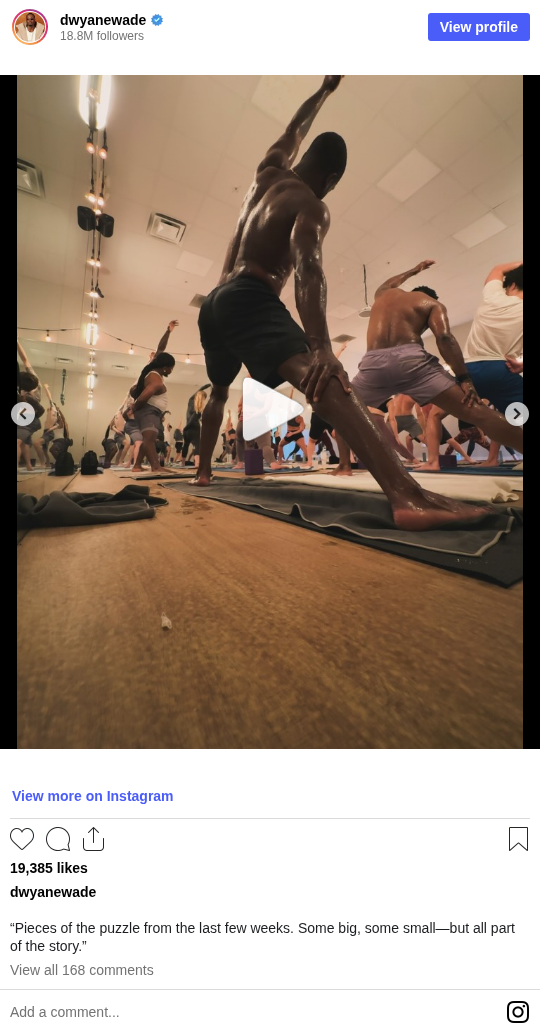
Make recovery active. Contrast therapy (sauna or hot shower followed by cold exposure if available), consistent soft-tissue work, and sleep matter as much as the training itself.


Get the baseline medical work done. Family history, age, and lingering symptoms are reasons to request fuller screening rather than a standard physical.
Fuel for recovery, not just performance. Greens, protein, and targeted support for inflammation and joints help close the loop.
Protect the mental side the same way. Short daily meditation, journaling, or a walk with intention prevents the physical work from becoming just another stressor.
A Sample Session Inspired by Wade’s Current Approach
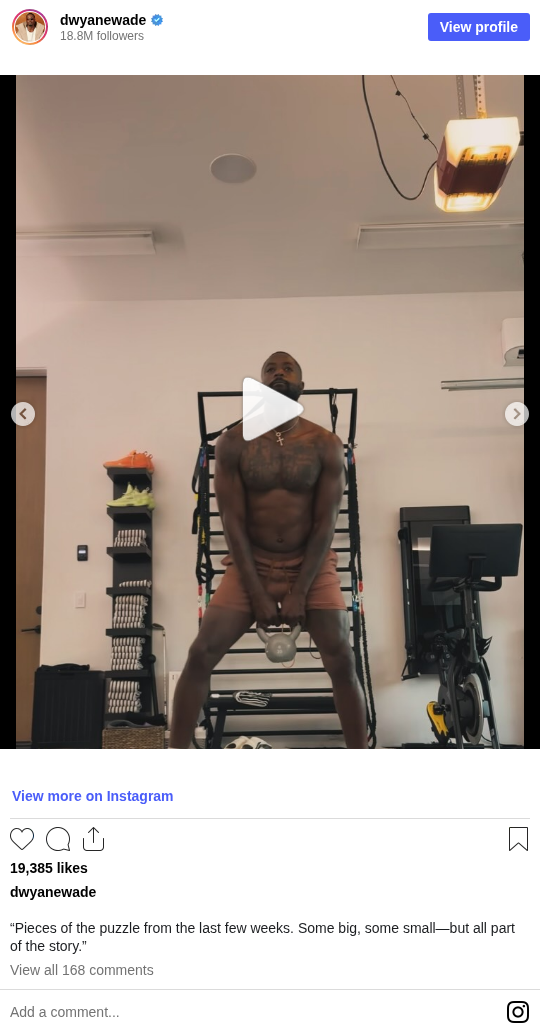
This is a practical, equipment-light session that mixes mobility, strength, and recovery emphasis. It can be done at home or in a basic gym and scaled for different fitness levels. Aim for 3–4 sessions per week, with at least one dedicated mobility or yoga-focused day.
Warm-up / Mobility Flow (12–15 minutes)
Start with light movement: marching in place or easy jogging in place for 2 minutes, then dynamic stretches (leg swings, arm circles, hip openers, thoracic rotations). Move into a short yoga-style flow: downward dog to plank to low lunge (each side), cat-cow, pigeon or figure-four stretch for the hips, and a few minutes of deep breathing while holding a gentle stretch. The goal is to raise body temperature and open the hips, shoulders, and thoracic spine—areas that absorb a lot of basketball-related stress.
Strength Circuit (3–4 rounds)
Goblet or bodyweight squats: 10–12 reps
Push-ups (elevate hands if needed): 8–12 reps
Reverse lunges or walking lunges: 8–10 per leg
Plank or side plank: 30–45 seconds
Optional: light kettlebell or dumbbell rows or pull-ups if available: 8–10
Rest 60–90 seconds between rounds. Keep the pace controlled; the emphasis is quality and joint-friendly ranges rather than max effort.
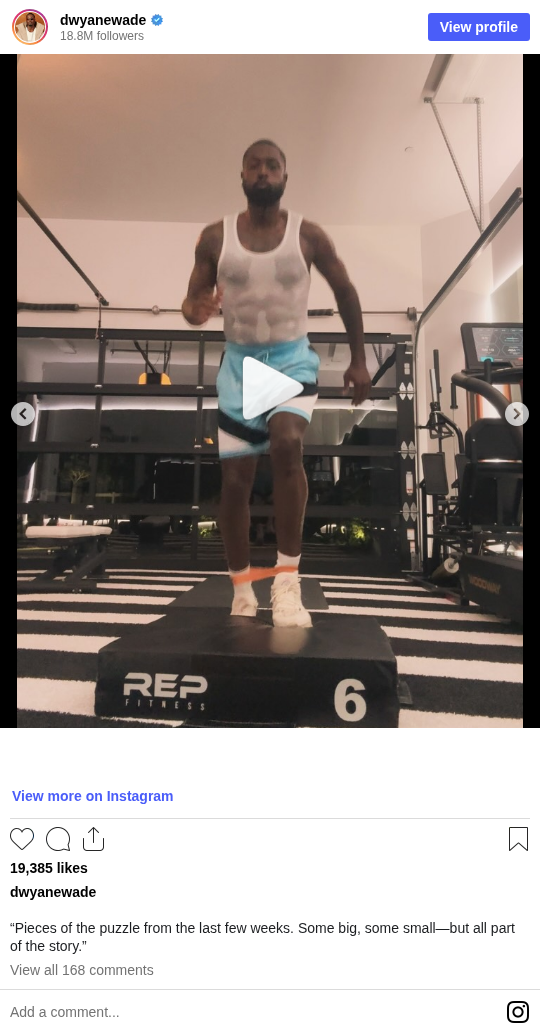
Finisher / Conditioning (optional, 5–8 minutes)
Easy intervals on a bike, rower, or brisk walking: 30 seconds of elevated effort followed by 60–90 seconds easy, repeated 4–6 times. Or simply a longer walk.
Recovery close (10+ minutes)

Static stretching focused on hips, hamstrings, chest, and shoulders. If available, finish with a hot shower or brief sauna session followed by a short cold exposure. Hydrate, take any daily greens or recovery supplements, and note how the body feels for the next session.
The Playbook
1. Treat early morning as protected time for the body and mind before external demands arrive.
2. Build at least one weekly session around mobility or hot yoga to counter accumulated joint stress.
3. Pair every hard training effort with deliberate recovery—sauna, cold, soft tissue, or simply intentional downtime.
4. Request fuller screening when symptoms appear or family history exists; do not wait for the standard physical to catch everything.
5. Prioritize consistency and how you feel over looking a certain way on any single day.
6. Use simple fueling tools (greens powder, protein, basic recovery support) to close the loop between work and restoration.
7. Keep a short daily practice—meditation, journaling, or a walk—that resets the mind the same way training resets the body.
Five Verified Quotes
“I feel like I’m in better shape now than I was actually as a player. I was very muscular, but I didn’t take care of my body in the way that I should’ve because I didn’t have the knowledge.”
“Stage 1 cancer… those words hit hard. December 2023 meant losing 40% of my kidney. It’s a scary thing to face. My dad’s own health journey taught me the importance of being proactive.”
“That moment was probably the weakest point I’ve ever felt in my life… In that process of my weakness, I found strength in my family.”
“If you have a primary care doctor, put them to work. Don’t let them just come, bring you in and put you out the door… ask the right questions.”
“Hot yoga… is a whole different challenge mentally for me, as well as physically. But the mental challenge of being in 100 plus degree [heat]… we’re really in there training.”
Wade’s competitive chapter closed with championships, individual dominance, and a willingness to adapt when the roster changed. The chapter that followed has been quieter and, by his own account, more intentional. The early mornings, the yoga that forces presence, the recovery protocols, the proactive medical work, and the decision to treat health as the foundation rather than the byproduct are the new standard he is holding. For anyone still training, recovering, or simply trying to stay capable for the long run, the example is straightforward: the work does not stop when the competition ends. It just changes form.
Ready to Train Like a Champion?
Unlock world-class training built for athletes who keep showing up for the next chapter.
Unlock the App