It's the summer of 2004 (yes, we know some of you weren't even born yet). Brian Urlacher is already a four-time Pro Bowler, a Defensive Player of the Year candidate, and one of the most feared linebackers in the NFL.
At 6'4" and 260 pounds, with a 4.49 forty and a 38-inch vertical, he could have coasted on what he'd already built.
But Urlacher wasn't wired that way.
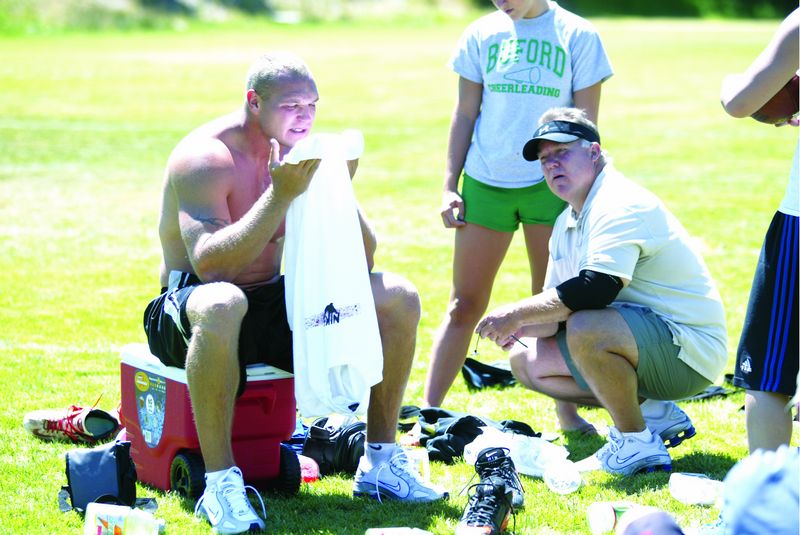
He wanted that extra inch in the fourth quarter — the one that separates good from legendary. So he did something radical: he left the familiar walls of Chip Smith's Competitive Edge Sports complex in Atlanta and headed 2,000 miles west to the thin air of Truckee, California, just outside Lake Tahoe. For an entire month, at nearly 6,000 feet above sea level, he trained in conditions designed to break him down and rebuild him stronger.
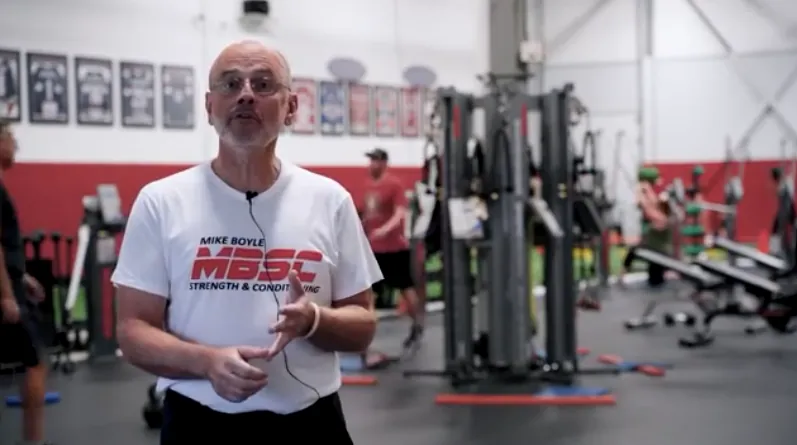
Chip Smith, Urlacher's longtime trainer and one of the most respected performance coaches in the world, designed the program from the ground up.
"Normally, I wouldn't agree to train someone outside our Atlanta complex for that long. But because I have been training Urlacher for five years, he is one of the very few clients for whom I'd do it."
— Chip Smith
 @coachchipsmith
Urlacher's own motivation was straightforward:
"I just wanted to do something different. I get tired of doing the same thing all the time. A lot of Olympic athletes train in high altitudes, so I wanted to check it out that year."
— Brian Urlacher
The mission was clear — transform his body into a more efficient oxygen-processing machine so he could dominate late in games the same way he dominated in the first quarter. In the thin mountain air, every sprint, lift, and explosive drill triggered hypoxia. His body responded by producing more red blood cells — its own natural EPO effect. When he returned to sea level, that advantage would translate into faster recovery and sustained explosiveness.
 @coachchipsmith
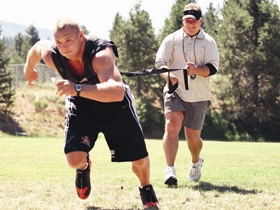
Smith left nothing to chance. He broke down game film from four previous games, charting every play by quarter, down, distance, and exact movement. He rebuilt the program as a live NFL simulation. Urlacher trained wearing a Polar heart-rate monitor and custom X-Vest shoulder pads loaded with twice the normal game weight. Resistance bands with quick-release handles mimicked the force of taking on 300-pound linemen. Quick-foot ladder drills, ballistic warm-ups, and high-volume endurance lifting with only 25-second rests between sets replicated the chaos of game day. Nutrition was locked in at roughly 5,800 calories per day with 256 grams of protein, delivered in precise windows.
It wasn't comfortable. It wasn't convenient. And that was the entire point.
"The first week wasn't very fun, but after I got adjusted, it was better every week, and I felt like I'm in the best shape."
— Brian Urlacher
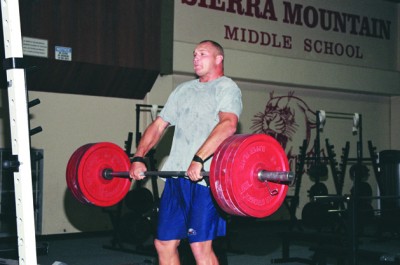 @54urlacher
The results spoke for themselves. In under two weeks, his body fat dropped from 6.9% to 5.2%. Lung capacity increased by 2%. Heart-rate recovery — the true marker of conditioning — improved dramatically. What once took three minutes to drop from 173 bpm to 118 bpm now fell to 80 bpm by the end of the month. By week four he sat at 4.9% body fat and moved with a new kind of sustained power.
That season and the years that followed, Urlacher's fourth-quarter dominance became legendary. The willingness to get uncomfortable paid dividends far beyond one campaign — helping cement a Hall of Fame career built on relentless adaptation.