Roger Federer and the 54 Percent Nobody Talks About
The math behind a legend, the work that made it look easy and what comes after the last match.
Here is a number that should make every former athlete feel a little better about their bad days.
Roger Federer played 1,526 singles matches and won close to 80 percent of them. Ask most people what percentage of the individual points he won and they will guess something huge. Seventy. Maybe more.
He asked that exact question to a room full of graduates at Dartmouth in June 2024. He stood up there in a black gown, a tennis racket in his hand, and let them guess.
Then he gave them the answer. Fifty-four percent. The most graceful tennis player most of us will ever watch lost almost half the points he played. “When you’re playing a point, it is the most important thing in the world,” he told them. “But when it’s behind you, it’s behind you.”
I think about that a lot. We remember the great ones as people who rarely lost. Federer was telling a group of 22-year-olds the opposite. He lost all the time. He just stopped letting each one follow him to the next point.
Effortless Was Never the Truth
For most of his career people said he barely broke a sweat. He hated that. “Effortless is a myth,” he said in the same speech. “I had to work very hard to make it look easy.”
He was born in Basel in 1981, turned pro in 1998 and was No. 1 in the world by 2004. What followed is the part everybody knows. Twenty Grand Slam titles. Eight at Wimbledon. 103 tour titles and 310 weeks at the top of the rankings. On grass, with that one-handed backhand, he looked like a man who had simply been born knowing how to do it.
He wasn’t born knowing. He was a hot-headed junior who threw rackets. The calm came later, and he has been honest that it came from practice too. He trained himself not to get upset, and once he could do that, he said he could see things more clearly under pressure. The mental side got better the same way his backhand did. Reps.
The Work Nobody Filmed
The highlight reels never showed Pierre Paganini. For more than a decade the Swiss fitness coach built Federer’s body, and the goal was never size. It was efficiency. Reaction drills. Balance work on unstable surfaces. Core stability. Strength and conditioning blocks planned so carefully that recovery was written into them, not tacked on at the end.
And then there was sleep. Federer has talked about nine or ten hours a night, plus a nap, like it was part of the job. For him it was. He treated recovery as training rather than the thing you do once training is over.
That is the part most of us get backwards after our playing days. We keep the intensity and drop the recovery, then wonder why everything hurts.
Life After the Last Match
He retired after the 2022 Laver Cup, crying next to Rafael Nadal. He has admitted the first couple of years were harder than he expected. His knee needed a long rest. He played a lot of golf.
These days he is back on court two or three times a week, often with his kids. Mostly he hits serves, because he says that motion is the first thing to go rusty. He still protects his sleep. He listens to his body about volume. His mornings are almost boring on purpose: shower, make the bed, don’t pile too much into the first hours of the day.
He works with young players through Uniqlo’s Next Generation program now, and he tells them something I wish someone had told me at 17. Feeling pressure just means you care. You aren’t supposed to make it disappear. You’re supposed to give the current point your full attention and nothing else.
The Same Standard in Business
In 2019 he took an equity stake in On, the Swiss shoe company, instead of signing a standard endorsement deal. He has said the difference mattered to him. They came to him as a partner, not a face for a billboard. So he acted like one. He spent time with the product teams in Zurich and helped design the ROGER Pro tennis line as the brand grew well past running shoes.
Add a long-term Uniqlo deal and the Laver Cup, the team event he helped create, and you get a second career built with the same patience as the first. No single big moment. Just showing up for the current project and doing the unglamorous work until the result looks clean.
The third lesson from Dartmouth is the one that ties it together. Life is bigger than the court. Family, friends, the people who were there before the trophies. They are not a distraction from the work. They are the reason it was worth doing.

Train Like Federer: Quality, Movement and the Next Point
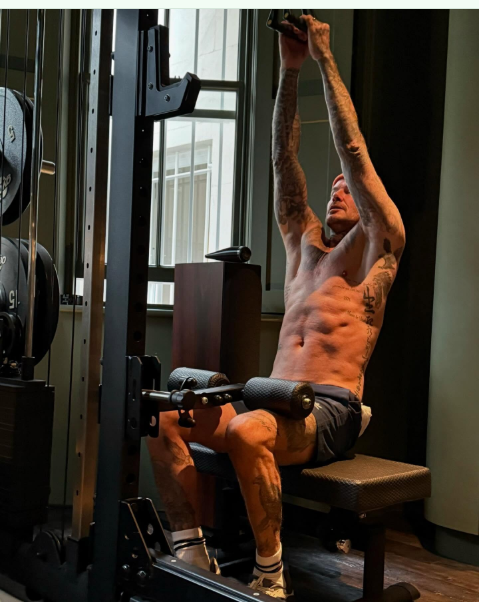
This is an IDNTY session built around what Federer and Paganini cared about most: moving well, staying balanced, reacting fast and recovering like it counts. It isn’t his exact routine. It borrows the priorities and gives you something you can do in a regular gym or a garage.
The Workout at a Glance
Total time: 35–40 minutes
Equipment: Resistance band, dumbbells or kettlebell, optional cones or markers
Focus: Footwork, balance, core stability, functional strength, recovery
Phase 1 · Movement Prep (6–7 minutes)
Lateral band walks: 12 steps each direction
Single-leg balance with opposite-arm reach: 8 each side
Bodyweight split squats: 8 each leg
Banded hip openers: 10 each direction
Wake up the hips, ankles and core before anything heavy.
Phase 2 · Strength and Stability (3 rounds)
Goblet squat: 10–12
Single-leg Romanian deadlift: 8 each leg
Dumbbell or kettlebell reverse lunge: 8 each leg
Pallof press or anti-rotation hold: 10 each side
Push-up or elevated push-up: 8–12
Controlled tempo. Stop a rep or two short of failure. Clean movement beats heavy weight here.
Phase 3 · Agility and Reaction (6–8 minutes)
Set three markers in a small triangle. Shuffle quickly between them for 20–30 seconds, then go easy for 20–30 seconds. Repeat 4–5 times.
Optional: have a partner drop a ball or flash a hand signal so you have to react.
Keep each burst short enough that your feet stay sharp. When the interval ends, let it go.
Phase 4 · Recovery (4–5 minutes)
Easy walk or light bike, then hip flexor, hamstring and calf stretches. Finish with a few slow breaths. That session is over. The next one is a new point.
Your Playbook
1. Let the last point go
A missed lift, a bad meeting, a rough round of golf. Replaying it costs energy you need for what’s in front of you.
2. Put your effort into quality
Federer’s “easy” look came from thousands of careful reps. Do fewer things, and do them well.
3. Protect recovery like you used to protect practice
Sleep is still the best tool you have. Volume without recovery is just noise.
4. Keep one sport that is just fun
For him it’s golf and hitting with his kids. Find the thing that keeps you moving without needing the old schedule.
5. Build something that lasts
A business, a product, a program for younger athletes. They all take the same long view that made 54 percent enough.
6. Keep life bigger than the court
The people around you are the reason the work matters.
The Gap Is Where the Work Lives
Close to 80 percent of the matches. Only 54 percent of the points. Everything that made Federer great sits in the space between those two numbers. You don’t stop losing points when you get good. You just stop carrying them. “There is no way around the hard work,” he said. “Embrace it.” The next point is always there, whether it’s a serve, a decision at work or the first set of your next session.
Ready to Train Like a Champion?
Unlock world-class training built for athletes who keep showing up for the next chapter.
Unlock the App