Steve Nash Never Slows Down
Two MVPs, a bad back, a podcast with LeBron and the details that keep a former athlete moving for life.
Pull up any old Phoenix Suns broadcast from 2005 and stop watching the ball. Watch Steve Nash’s head instead. It is turning before the inbound pass lands, scanning the weak side, clocking which big man is a half step late getting back. By the time he crosses half court, the play has already happened in his mind. Everyone else in the building is reacting. He is just waiting for the floor to catch up.
Nothing about the way he looked warned you. At 6-foot-3, without the explosive vertical leap or imposing frame that defined many of his contemporaries, he was hardly the prototype of an NBA superstar. He wasn’t supposed to overpower defenders, outrun the fastest guards in the league, or dominate a game through sheer physical force. What he possessed was something considerably harder to teach: an extraordinary understanding of movement, timing, space, and the people around him.
For nearly two decades, Nash made some of the world’s best basketball players look a step behind. He saw passing lanes before they existed, understood defensive rotations before they developed, and had an uncanny ability to turn five individual players into something that functioned as one. The result was an extraordinary career that included eight All-Star selections, five NBA assists titles, two consecutive MVP awards, and an eventual place in the Hall of Fame.
But Nash’s story is about more than basketball. It is about the willingness to keep developing when the world assumes you’ve already reached your ceiling, the discipline to recognize that physical ability is only one part of athletic performance, and the understanding that staying competitive requires a different kind of commitment as the years pass. Today, the former MVP has entered another chapter, returning to the Phoenix Suns organization as a senior adviser while co-hosting a podcast with LeBron James that dissects the game at a level most fans never hear. His relationship with basketball has changed, but the curiosity and competitive instincts that made him special remain central to how he approaches life.
For Nash, the final buzzer was never going to be the end of the story.
How a Different Kind of Athlete Changed Basketball
Nash’s journey to the NBA wasn’t exactly the traditional path to professional greatness. Born in Johannesburg, South Africa, and raised in Victoria, British Columbia, he grew up playing multiple sports, including soccer, before basketball became his primary pursuit. He wasn’t a heavily recruited American prospect, and Santa Clara University was his only scholarship offer. Even after establishing himself as an outstanding college player, he entered the 1996 NBA Draft without the kind of expectations typically attached to future superstars.
Phoenix selected him 15th overall, but his first years in the league were a learning experience rather than an immediate ascent to stardom. He spent time developing his game, understanding the speed and physical demands of professional basketball, and figuring out how to turn his vision into a consistent competitive advantage. His eventual return to Phoenix in 2004 changed everything.
Playing in an offense that encouraged pace, movement, creativity, and unselfish basketball, Nash became the conductor of one of the most entertaining teams in modern NBA history. The Seven Seconds or Less Suns challenged conventional thinking about how basketball should be played, demonstrating that speed, spacing, decision-making, and teamwork could be just as devastating as traditional size and physical dominance. Nash won back-to-back MVP awards in 2005 and 2006, becoming the first Canadian-born player to receive the honor. His success was a reminder that greatness doesn’t always arrive in the package people expect.
The lesson extends well beyond basketball. Not everyone is built to be the strongest, fastest, or most naturally gifted person in the room. What matters is identifying your strengths, developing them relentlessly, and finding ways to make those strengths meaningful.
Why Movement Has to Remain Part of the Routine
For an athlete who spent much of his adult life playing professional basketball, walking away from the game presented a challenge that went beyond losing a daily schedule. Basketball had dictated his training, conditioning, recovery, travel, and physical preparation for nearly two decades. Retirement meant learning how to approach movement without the structure of an NBA season or the demands of competing against the world’s best players.
Nash has spoken openly about the physical challenges that eventually forced him to step away from basketball, including significant back problems. His approach to staying active has therefore required a different level of awareness than the one he could afford during his playing career. In a 2022 interview with GQ, he discussed the relationship between physical activity, mental health, and quality of life. He explained that he had rediscovered the importance of maintaining a healthy balance between work and personal well-being.
“Work-life balance is so paramount for all of us for our quality of life and our mental health,” Nash said. He also reflected on how much better he felt when he was able to remain active and participate in recreational sports, explaining, “I feel like I’m moving great, feel great, and can play every day if I wanted to.”
There is an important distinction between those two statements. The first reflects an understanding that physical health is connected to mental well-being, while the second demonstrates that staying active is not simply about maintaining an appearance or reaching a particular fitness benchmark. It is about preserving the ability to participate in the activities that make life enjoyable. For former competitive athletes, that transition can be difficult. There is often a temptation to measure every workout against the standards of a previous athletic career, even when the body, schedule, and priorities have changed.
Nash’s experience offers a different perspective. Training should evolve alongside the person doing it. Sometimes the most important work isn’t the workout that leaves you exhausted, but the consistent maintenance that allows you to keep moving tomorrow.
Mobility, Strength, and the Freedom to Keep Playing
Nash’s post-basketball approach highlights an important distinction between training to perform and training to remain capable. During his professional career, his body was an instrument of competition. Every practice, lift, sprint, and recovery session served a specific basketball purpose. Today, the objective is broader: preserve athleticism without allowing the pursuit of fitness to become another source of unnecessary physical wear and tear.
In a Phoenix Suns feature discussing his preparation during his playing career, Nash explained that he didn’t necessarily rely on overwhelming strength or explosive athleticism to gain an advantage. Instead, he focused on making the most of his coordination and movement. “Instead, I try to use my coordination, balance and momentum to my advantage,” Nash explained.
That philosophy offers a useful framework for anyone trying to remain active throughout life. Strength matters, but so do balance, mobility, coordination, and the ability to move efficiently. His approach can be understood through four important principles.
1. Mobility and Stability
Daily movement is especially important for athletes whose previous careers involved repetitive loading, explosive changes of direction, and years of physical contact. Nash has discussed using low-impact mobility and stability work to maintain his back and keep his body prepared for activity. For former athletes, a consistent warm-up, controlled movement, and exercises that address individual weaknesses can be more valuable than simply adding more weight or intensity.
2. Resistance Training
Strength doesn’t become less important when organized competition ends. It simply takes on a different purpose. Resistance training helps maintain muscle, support joint function, and preserve the physical capacity needed for everyday activities. The objective is not to recreate an NBA strength program. It is to develop a sustainable routine that challenges the body appropriately while respecting its limitations.
3. Cardiovascular Fitness
Nash has maintained his connection to sport through activities such as tennis and soccer. There is something particularly valuable about choosing movement that is enjoyable rather than treating every session as an obligation. For former athletes, recreational competition can provide the motivation that structured workouts sometimes lack. The activity may change, but the satisfaction of testing yourself never completely disappears.
4. Recovery
Perhaps the most important lesson from Nash’s transition is that recovery cannot remain an afterthought. Professional athletes often become accustomed to playing through discomfort because the demands of competition leave little room for anything else. Long-term athleticism requires a different mindset. Mobility, appropriate training loads, sleep, and the willingness to adjust when something doesn’t feel right are essential parts of remaining active. The goal is not to prove how much punishment the body can tolerate. It is to give it the opportunity to keep doing what you love.
The Steve Nash Court Vision Workout
The philosophy: Build a body that moves intelligently, efficiently, and confidently.
Steve Nash’s greatest advantage was never brute strength. It was his ability to combine balance, coordination, movement, and decision-making in ways that made him incredibly effective on the basketball court. This original IDNTY workout takes inspiration from those qualities. Designed around functional strength, rotational stability, coordination, and cardiovascular conditioning, it provides a practical way to develop the physical attributes that help athletes move better.
This is not Nash’s personal workout routine. It is an IDNTY-designed session inspired by his athletic philosophy and documented approach to movement.
The Workout at a Glance




Total time: 40–45 minutes
Difficulty: Intermediate
Equipment: Dumbbells, resistance bands, stationary bike or rowing machine
Primary focus: Functional strength, balance, coordination, core stability, and conditioning
Phase 1 · Movement Preparation (7 minutes)
The objective is to prepare the body for movement rather than immediately asking it to perform at maximum intensity.
Cat-cow mobility: 10 repetitions
World’s greatest stretch: 5 each side
Glute bridges: 15 repetitions
Bird dogs: 10 each side
Bodyweight squats: 15 repetitions
Lateral band walks: 10 each direction
Phase 2 · Functional Strength (15 minutes | 3 rounds)
Goblet squats: 12
Single-leg Romanian deadlifts: 10 each leg
Dumbbell reverse lunges: 10 each leg
Push-ups: 12
Dumbbell rows: 12 each arm
Rest approximately 45–60 seconds between exercises as needed. The emphasis is on controlled movement, balance, and maintaining good positioning throughout each repetition.
Phase 3 · Balance and Athletic Control (8 minutes | 2–3 rounds)
Single-leg balance with reach: 30 seconds each leg
Pallof press: 12 each side
Standing band rotations: 12 each side
Lateral shuffle: 20 seconds
Dead bugs: 10 each side
This is the defining section of the workout. The objective is to challenge coordination and control rather than simply accumulate repetitions.
Phase 4 · Cardiovascular Finisher (8–10 minutes)
Choose a stationary bike, rowing machine, or another low-impact cardio option.
30 seconds at a challenging but controlled pace.
60 seconds at an easy recovery pace.
Repeat six times.
Finish with two minutes of easy movement and relaxed breathing.



The IDNTY Takeaway
The most interesting thing about Nash’s athletic career is that he never needed to win the physical battle in the conventional sense. He understood that coordination, timing, balance, and decision-making could be just as important as raw strength. This workout brings that philosophy into the gym. The objective is not to become the biggest athlete in the room. It is to become a more capable, coordinated, and resilient one.
From the Point to the Sideline
Nash’s first job after his playing days was not a broadcast seat. In 2015 the Golden State Warriors brought him on as a player development consultant, and he spent years working with Stephen Curry and the young Warriors guards during their championship run. At the same time he served as general manager of Canada’s men’s national team from 2012 to 2019, learning how to build a roster instead of simply running one.
Then, in September 2020, the Brooklyn Nets made one of the boldest hires in the league. They named Nash head coach with no previous coaching experience at any level and handed him a roster built around Kevin Durant and Kyrie Irving. A few months later James Harden arrived by trade, giving Nash three of the most gifted scorers in the world and the pressure that comes with them.
His first season delivered. Brooklyn went 48-24, earned the second seed in the East and pushed the eventual champion Milwaukee Bucks to seven games in the conference semifinals. Durant’s toe was on the three-point line at the end of regulation in Game 7, the difference between a series win and an overtime loss. Injuries to Irving and Harden during that series left Nash coaching a depleted team against the league’s best, and it still came down to inches.
The next two years tested him in ways no playbook covers. Irving missed much of the 2021-22 season, Harden was traded to Philadelphia, and the Nets were swept by Boston in the first round. Brooklyn parted ways with Nash in November 2022, a few games into his third season. He finished with a 94-67 regular-season record, a winning mark through some of the most turbulent years any franchise has had.
What makes that chapter matter is not the record. It is that Nash took the hardest seat in the building with no safety net, learned in public, and walked away still loving the game. He has spoken about how much he learned about managing people, egos and expectations, and that education shows up in everything he has done since, from the Suns front office to the film room on Mind the Game.
There is a lesson in it for every former athlete. The skills that made you great in one role do not automatically transfer to the next one, and you will be a beginner again. Nash said yes to being a beginner on the biggest stage in basketball. Most of us only have to say yes to a new gym, a new sport or a new routine.
Building Something That Lasts
Nash’s competitive identity was never limited to what happened between the lines. Through the Steve Nash Foundation, he has supported underserved children and initiatives focused on health, education, personal development, and the opportunity to enjoy an active life. His involvement in youth basketball and Canadian basketball leadership has also reflected a commitment to helping the next generation experience the opportunities that shaped his own development.
He has also applied the same principles of access and consistent movement to the fitness industry. In the late 2000s, Nash partnered with Mark Mastrov, the founder of 24 Hour Fitness, to open the Steve Nash Sports Club in Vancouver. The concept expanded when the group acquired the Fitness World chain in British Columbia and rebranded the locations under the Steve Nash name. The clubs were built around the idea of making quality training environments available to more people in a sports-oriented region that had relatively few options at the time. While the business later went through ownership changes and a rebrand that dropped his name, the original impulse was the same one that defined his playing career: create conditions where people can improve and stay involved.
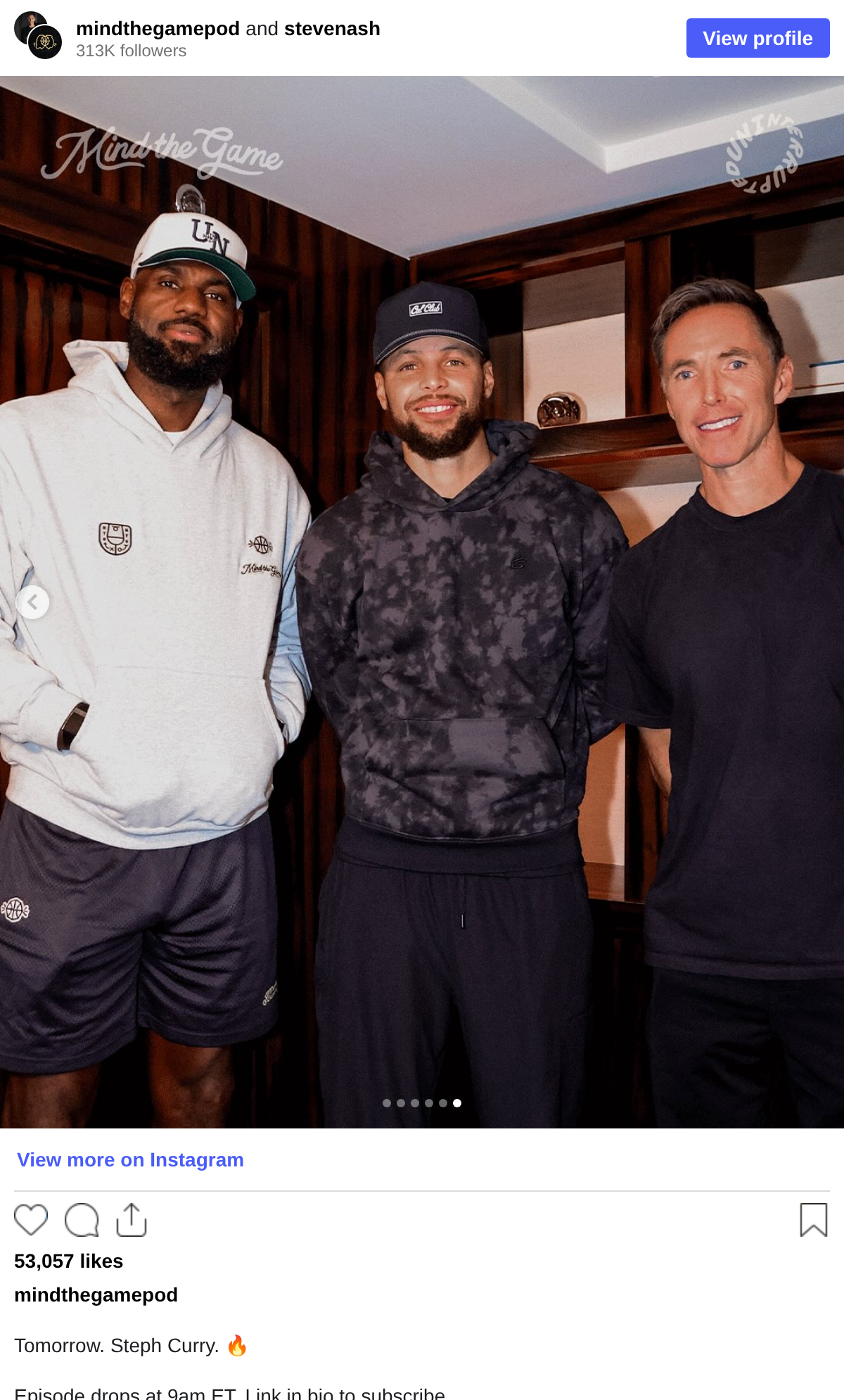
His relationship with basketball has continued through different roles, including time as head coach of the Brooklyn Nets and his return to Phoenix in 2025 as a senior adviser to the Suns. In 2025 he also joined LeBron James as co-host of the podcast Mind the Game. The show is built for people who want a detailed, analytical look at the sport—spacing, decision-making, how players process the game in real time, and what actually sustains elite performance over long careers. Nash and James break down film, discuss longevity, and examine why certain players continue to produce at a high level well into their later years. It is the same curiosity Nash brought to the floor, now applied in conversation with one of the few players whose basketball intelligence matches his own.
That progression is worth considering. The skills that made Nash exceptional as a player—communication, preparation, problem-solving, and the ability to recognize what teammates needed—are not skills that disappear when an athletic career ends. They can be applied in entirely different environments. For many former athletes, this is one of the most difficult parts of retirement to recognize. The competitive environment may be gone, but the qualities developed through years of sport remain incredibly valuable. Leadership doesn’t retire. Discipline doesn’t retire. The ability to work toward something bigger than yourself doesn’t retire. The challenge is finding a new place to apply those qualities.
How to Think Like Steve Nash
Nash’s career provides several valuable lessons for anyone who wants to maintain an athletic identity long after competitive sports have ended.
1. Stop measuring yourself against your former self
Your athletic prime was one chapter of your life, not the standard every future chapter must meet. Build goals that reflect your current abilities and the person you want to become.
2. Make mobility part of your everyday routine
You don’t need an elaborate program to begin. Consistent, appropriate movement can help prepare your body for the physical demands of daily life and recreational activity.
3. Find a sport you genuinely enjoy
Competition doesn’t have to disappear just because there are no standings or championships involved. Tennis, soccer, basketball, cycling, and recreational leagues can all provide a reason to stay active.
4. Develop your strengths while addressing your weaknesses
Nash built an extraordinary career by understanding what made him different rather than trying to imitate someone else’s game. The same principle applies to fitness. Identify what you do well, work on what needs attention, and build a routine that reflects both.
5. Make the people around you better
One of Nash’s greatest gifts was his ability to elevate teammates. Bring that same mindset into your relationships, workplace, family, and community. Athletic excellence is impressive, but the impact you have on other people can last considerably longer.
6. Stay curious
The best athletes are lifelong students. They remain willing to learn, adapt, and challenge assumptions. That mindset matters just as much in retirement as it does during a professional career.
The Competitor Never Really Leaves
Steve Nash spent his career proving that greatness doesn’t have to look a certain way. He wasn’t the most physically imposing player on the court, but he understood how to maximize what he had, continuously improve, and make everyone around him better. His next chapter is built around a different definition of performance. It is less about winning the next game and more about maintaining the physical and mental freedom to keep participating in life, staying connected to the people and activities that matter, and finding new ways to contribute.
For the former athlete who misses the structure of practice, the excitement of competition, or simply the feeling of being part of a team, there is something reassuring in that message. You may not have the same body you had at 20. You may not have the same schedule, the same priorities, or the same opportunities to compete. But you haven’t lost the qualities that made you an athlete in the first place. The game changes. The mindset doesn’t have to.
Ready to Train Like a Champion?
Unlock world-class training built for athletes who keep showing up for the next chapter.
Unlock the App