Here is the part nobody wants to say out loud in a weight room: a lot of former athletes are not broken because they got old. They are broken because the work that made them fast and strong never learned how to keep them available.
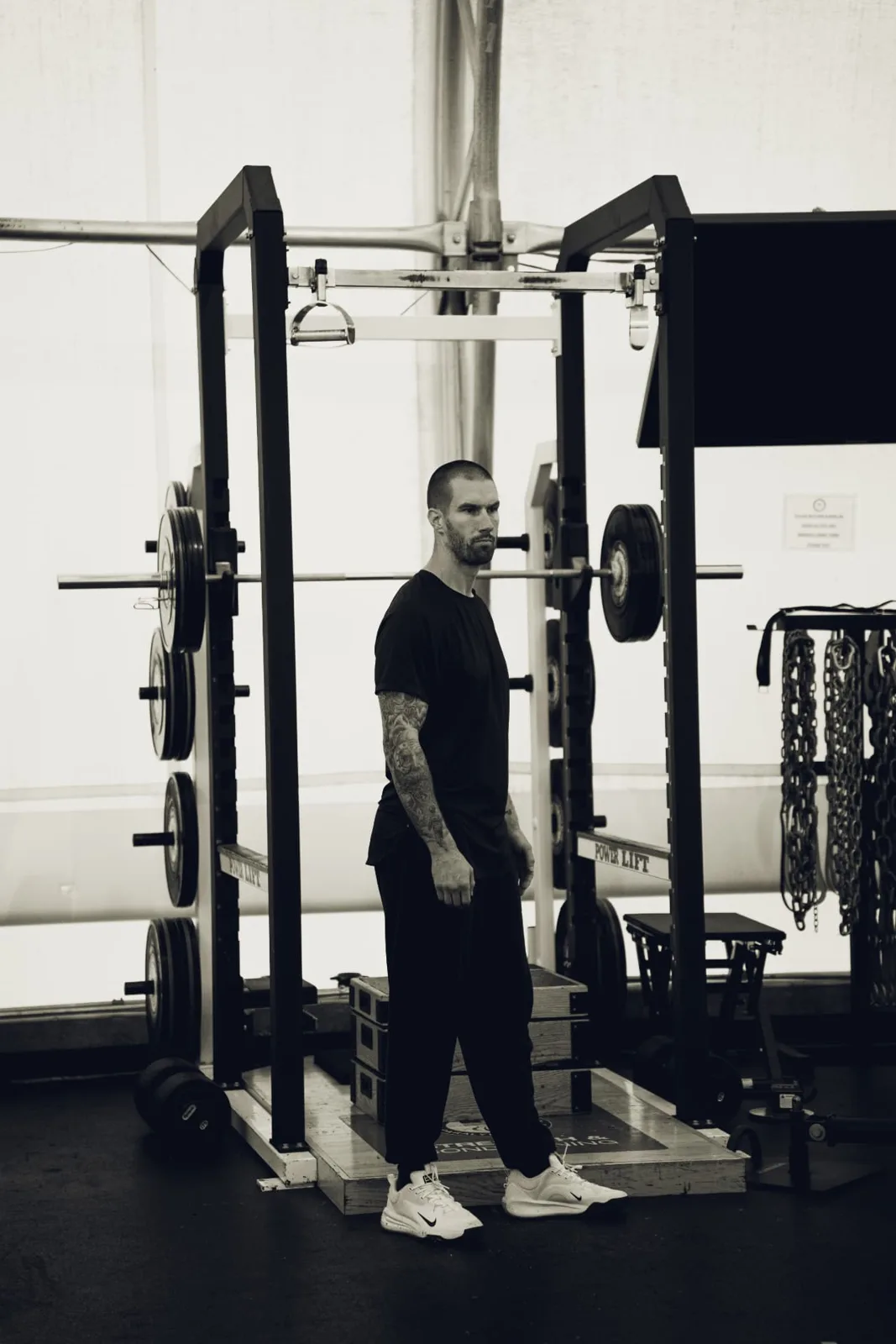
Dan Foley has spent fourteen years in that gap. Not the highlight-reel side of coaching. The unglamorous side. Return-to-play. Restoration. The weeks after the MRI when you are cleared to “start moving again” and nobody hands you a map. He co-founded Rude Rock Human Performance. He spent six years as head strength coach at Virginia High Performance, rebuilding Navy SEALs and Special Operations athletes who do not get to treat pain as a personality trait. He is a CSCS, a licensed massage therapist, and one of the louder voices in fascial-based training. Stu McMillan has called him a generational talent. The IDNTY version of that compliment is simpler: he is the coach you want when the body that used to tolerate everything suddenly does not.
Foley recently asked a question the profession would rather skip. What role have strength coaches played in rising injury rates?
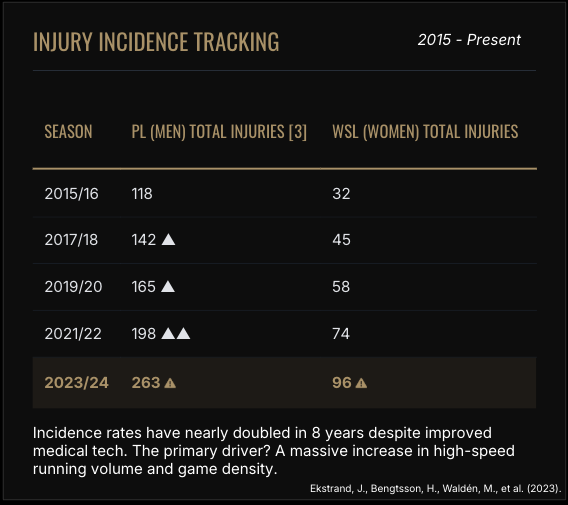
His answer is not a pile-on. It is an accountability check. Performance has exploded. Athletes are faster, stronger, better equipped than they were 25 years ago. Injury rates have climbed anyway. Availability has dropped.
“We’ve built a lot more Ferraris in the last 25 years, but too often, we still manage them like Corollas.”
— Dan Foley
If you are a former competitive athlete, that sentence is your last decade.
Coaches got very good at producing numbers. Force plates. Velocity. Jump height. The profession needed those numbers to prove it belonged in the building. Foley’s critique is that the obsession with output quietly shoved health into the after-visit summary. Soft tissue work after the soreness shows up. Regeneration after the fatigue is already in the bank. Treat the Ferrari like a commuter car, then act surprised when a hamstring files a complaint.
He quotes Dan Pfaff because the quote is supposed to make the person writing the sessions uncomfortable:
“The most dangerous person in an athlete’s life is the one who writes their program.”
— Dan Pfaff
Programming is not neutral. Every exercise is a vote. Every loading choice is a bet. Every thing you skip is still a decision. Foley’s point is that the strength coach is a curator of risk, whether they admit it or not. You can write a program that makes someone impressive on paper and fragile on Tuesday. You can also write one that makes them harder to break.
“Performance is not just what an athlete can produce, but what they can tolerate and sustain.”
— Dan Foley
That is the sentence IDNTY was built on. Your game never ended. Your tissue did not get the memo that you still want to train like it did.
The industry still talks about health as if it lives in a different building from strength. Ice after. Massage after. See the trainer when it is already loud. Foley wants the order flipped. Health is the governing variable. If output outruns recovery capacity, the system fails. Not eventually. On schedule.
The rebalance he is arguing for is not “do less and hope.” It is sustain what you already built.
“We’ve mastered the art of creating capacity. Now we have to master the discipline of sustaining it.”
— Dan Foley
Former athletes feel this in the places the old program never visited. The ankle that was “just a sprain” in college and now ruins every cutting session. The throwing shoulder that got you recruited and now makes the top shelf of the pantry a negotiation. The hip and hamstring that used to be special teams and now are a weather report. Rehab discharged you. Full training never quite took you back.
That gap is Foley’s job.
The Restoration Method, Without the Mysticism
Every Danny Foley program on IDNTY is built on the same three pillars.
1
Isolated joint mobilization
Get the joint moving before you ask it to work under load.
2
Soft tissue application
Fascial work that frees what has been glued down by years of the same patterns.
3
Targeted strengthening
Rebuild the tissue’s ability to tolerate real athletic force, not just survive a physical therapy hallway.
That is not a spa menu. That is the sequence operators used when the next mission was not optional. Foley took the same system he used with SOCOM personnel and rebuilt it for former athletes who still want to train hard without collecting a new diagnosis every offseason.
“Restoration isn’t the consolation prize for getting hurt. It’s the work that decides how long you get to keep playing.”
— Dan Foley
If you have been waiting to “feel 100 percent” before you start again, that is how people stay out for years. Restoration is the training. It is how you get back in.
All three are one-time purchases with lifetime access. Start where the pain lives.
ROOTED: The Foot & Ankle Reset
For the former athlete who “just rolled it” enough times that the foot now runs the rest of the kinetic chain. Late-phase rehab or a complement to the lifting you already do. Joint work, soft tissue, then strength progressions with video and coaching cues. If your first step still feels like a rumor, start here.
Built for throwers and overhead athletes. The shoulder that got you paid, recruited, or just made you dangerous on a court does not want another season of max pressing and hope. Mobilization, tissue work, then strength and flexibility restoration so the joint can do its job without recruiting your neck as a substitute coach.
For the hip, the hamstring, the low back that has been “tight” since the last season that mattered. Posterior chain strengthening after the joint and tissue are actually prepared to take it. This is the program for people who keep stretching the same spot and wondering why it never stays gone.
Your Playbook If You Are Hurt, Rusty, or All of the Above
Seven moves for the body you have now.
1
Stop managing a Ferrari like a Corolla
You used to tolerate garbage volume because you were 20 and in a locker room. That era is over. Program for what you can sustain, not what you can survive once.
2
Treat the program as the injury risk
If every week looks like the same heavy patterns with no joint work and no tissue work, you are not being hard. You are being predictable. Predictable tissue fails.
3
Restore before you load
Mobilize the joint. Free the tissue. Then strengthen. Foley’s three pillars are the order, not a buffet.
4
Start at the site that actually limits you
Foot and ankle if the ground feels dishonest. Shoulder if overhead work has become a rumor. Hip and hamstring if your stride is a negotiation. Do not jump to the lift that used to make you feel like yourself.
5
Make health proactive
Ten minutes of joint and tissue work before the session is cheaper than three months off. Recovery is not a reward for finishing. It is how you earn the next one.
6
Come back before you feel ready
Cleared and scared is still cleared. A restoration program is how you stop waiting for a version of yourself that only existed on a depth chart.
7
Longevity is the output now
Foley’s standard is availability. Can you train next month. Next year. The decade after the last time someone kept stats on you.
Get Back In
The rising injury conversation is usually aimed at current rosters. It belongs just as much to the people who left the roster and kept training like the season never ended. Foley is not asking you to become delicate. He is asking you to stop confusing damage with toughness.
You already built the engine. The work now is keeping it on the road.
Start where it hurts. Follow the sequence. Train like you still have a next season — because if you are here, you do.
Train With Danny Foley
The Restoration Method
ROOTED, Bulletproof Shoulders, and Power Stride — joint mobilization, fascial soft tissue work, and targeted strengthening built for former athletes who still want to train hard.